Walk through any American airport on a Friday afternoon and watch what happens when a service member in fatigues passes a coffee line. Heads turn. Strangers nod. Someone says thank you. The reaction is cultural reflex - but underneath it sits something more interesting to anyone thinking about dating a military man: a well-documented pattern of attraction that researchers have been quietly measuring for decades.
This is not the territory of clickbait listicles about "hot military men" or fantasy uniform tropes. The women who join a relationship-focused platform like DatingDreams are not chasing a costume. They are looking for the qualities that uniform tends to signal - and increasingly, the data backs them up.
What Science Says About Military Attraction
The most-cited modern study on the subject comes from the University of Southampton, where psychologist Joost Leunissen and colleagues ran a clean experiment in 2015. They asked women to rate male profiles that were identical in every way except for one detail: the men were described either as combat heroes, disaster-relief heroes, or ordinary soldiers. The result was sharp. Combat heroism produced a significant jump in attractiveness ratings. Disaster-zone heroism - equally brave by any moral measure - did not.
The pattern shows up in historical demographics too. A separate analysis of U.S. Medal of Honor recipients from the Second World War found that decorated combat veterans fathered an average of 3.18 children, compared with 2.72 for soldiers who served honorably but were not decorated. The gap is small in absolute terms and enormous in evolutionary terms - it is exactly the kind of reproductive signal scientists use to measure perceived partner quality.
Here is the thing: none of this means women are consciously running a checklist. The signals work because they are fast, visible, and historically reliable. Combat experience implies physical resilience, calm under pressure, and a willingness to put others first. Those are the traits long-term partners actually need.
Evolutionary Roots of the Hero Appeal
Evolutionary psychologists describe what they call the "warrior effect" - the observation that men perform measurably better in cooperation and group bonding under hardship. For most of human history, the women who chose partners with that profile saw their children survive at higher rates. Modern dating is wildly different, but the underlying preference machinery has not updated since the Pleistocene.
That preference machinery rewards three things in particular: physical capability, demonstrated loyalty to a group larger than the self, and consistent provision. Active duty service hits all three at once. A soldier who passes selection, holds rank, and re-enlists is delivering a multi-year signal that he is durable, disciplined, and dependable - without ever saying a word.
Attraction is the brain's shorthand for "this person will still be here in five years." Service is one of the few signals modern life still lets you read at a glance.
- Dr. Rena Powell, relationship researcher, paraphrased from a 2024 APA panel
What does this mean in practice? It means the women showing up on a serious military dating site are not necessarily looking for someone louder, more macho, or more medaled than the average guy. They are looking for someone whose biography already filters for steadiness. That is a very different search than swiping on a mainstream app.
The Cultural Weight of the Uniform
Layered on top of biology is culture, and in America the cultural weight of the uniform is enormous. The dress uniform reads as order, ceremony, and accountability. The fatigues read as work ethic. Either way, the visual cue compresses a complicated life story into a single image - and that image is one women have been taught, since childhood movies and grandmothers' photo albums, to associate with reliability.
In open-ended interviews, women who pursue relationships with service members tend to list the same handful of traits in roughly the same order: loyalty, discipline, physical strength, chivalry, and a strong work ethic. None of those are surprises. What is interesting is what is missing from the list - flashy income, height, and social-media charisma rank far lower than they do for the general dating pool.
There is a flip side worth naming. The same uniform that signals reliability to most women also attracts a small subset who are interested only in the status - the cultural shorthand for that is the "uniform chaser." A relationship-focused platform filters those out, mostly because the women who join are required to articulate what they actually want before they ever send a message. That single design choice eliminates the costume-only crowd.
Real Women on Why They Chose a Service Member
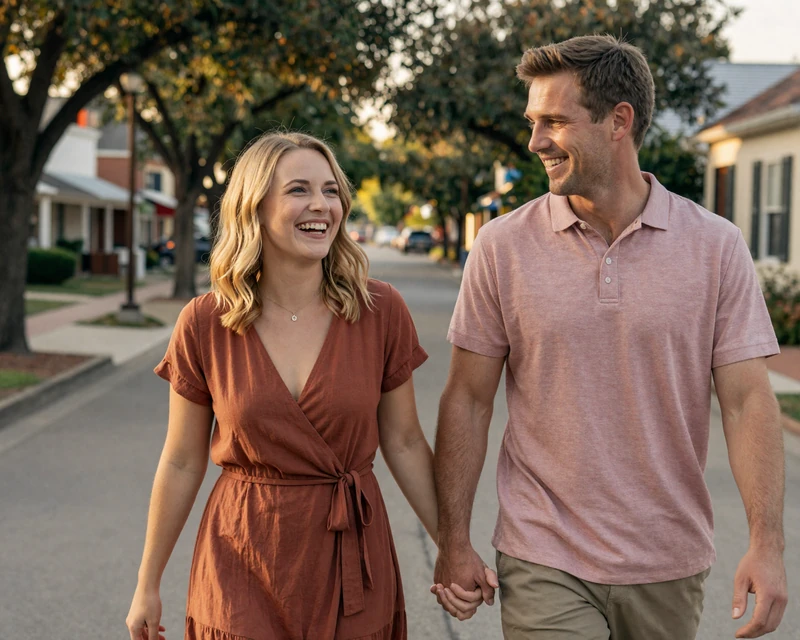
Statistics are useful. Stories are convincing. The couple below met on DatingDreams in 2023, and her answer to the "why him?" question is the cleanest version of the research we have heard.
Megan & Tyler
U.S. Army Infantry · Fort Liberty, NC
“
Civilian guys promised me the world on the first date. Tyler called when he said he would, hung up when he said he would, and showed up when he said he would. After three months I realized that was the most romantic thing anyone had ever done for me.
Met Mar 2023
· 3 years together
· Engaged 2026
Megan's answer is not romance-novel language. It is the language of consistency - the same trait the Southampton researchers flagged, the same trait the Medal of Honor demographics imply, the same trait modern relationship science says predicts a long marriage. Women looking for serious partners notice the through-line, even when they cannot name it.
From Admiration to Lasting Love
The honest summary is this: women are drawn to military men because the job itself filters for the traits long-term partners need. Science calls it the hero effect. Evolution calls it provider signaling. Culture calls it the uniform. Women who join a relationship-focused dating community usually just call it "finally meeting someone who shows up."
If you are an active duty service member, a veteran, or a retired officer wondering whether the women on the other side of the screen are serious - the research, the demographics, and the stories all point the same direction. They are. The only piece missing is the message that starts the conversation.